****
Bernie Peyton


This Mega International Origami competition (as we call it by the large number of registered creators) is dedicated to Lord Bernie Peyton, has him as a guest of honor and assigned the role of judge Fee. No doubt many of you know, in fact, the Lord Peyton and his actions, but many have no such knowledge, so in this space we want to bring you something of why Bernie Peyton has inspired us to dedicate this contest what are your qualities and achievements in his long and interesting life.
not want to write a long biography here, but if you establish two fundamental aspects of the life of Bernie Peyton are the same aspects of the Fair, namely, origami and Jucumaris. We do not know if both were born together or if one was before and one after, would have to ask him directly, but if we can credit from today's perspective are seen together and personified it.
From what we know, it is written in some biographical compilations, is that Bernie Payton from the age of 9 he met the origami. Of discretion will not say the date, but we can imagine the young Bernie in the world of models Lillian Oppenheimer, Magicians Harvin and origami Neal Elias and John Nordquist, Fred Rohm and Ligia Montoya and Adolfo American Cerceda; when CPs and their mathematical consequences were just developing in some Japanese village, guided by Isao Honda, Mihara family and arguably Akira Yoshizawa, origami as possibly not so widely called origami but "paperfolding." Maybe Bernie Hiawatha looking diagrams of Neal Elias with the same avidity that young people today are looking for origami diagrams Ryu-Zin.
What happened next? Well I have not very clear, but the young Bernie High School and studied its folded, studying biology in college and turned, he graduated from Harvard University in 1972 and turned, I think their awareness of the problems of life and environmental conservation and folded, he traveled to the Arctic by canoe and numb fingers also doubled, he found his better half and doubled, went and doubled ... and where do you travel? I suppose that many parts of the world, but I assume that no trip will be marked as much as she performs the Peruvian community of Santa Catalina de Chongoyape in 1977 sponsored by the New York Zoological Society (now known as the Wildlife Conservation Society).
not want to write a long biography here, but if you establish two fundamental aspects of the life of Bernie Peyton are the same aspects of the Fair, namely, origami and Jucumaris. We do not know if both were born together or if one was before and one after, would have to ask him directly, but if we can credit from today's perspective are seen together and personified it.
From what we know, it is written in some biographical compilations, is that Bernie Payton from the age of 9 he met the origami. Of discretion will not say the date, but we can imagine the young Bernie in the world of models Lillian Oppenheimer, Magicians Harvin and origami Neal Elias and John Nordquist, Fred Rohm and Ligia Montoya and Adolfo American Cerceda; when CPs and their mathematical consequences were just developing in some Japanese village, guided by Isao Honda, Mihara family and arguably Akira Yoshizawa, origami as possibly not so widely called origami but "paperfolding." Maybe Bernie Hiawatha looking diagrams of Neal Elias with the same avidity that young people today are looking for origami diagrams Ryu-Zin.
What happened next? Well I have not very clear, but the young Bernie High School and studied its folded, studying biology in college and turned, he graduated from Harvard University in 1972 and turned, I think their awareness of the problems of life and environmental conservation and folded, he traveled to the Arctic by canoe and numb fingers also doubled, he found his better half and doubled, went and doubled ... and where do you travel? I suppose that many parts of the world, but I assume that no trip will be marked as much as she performs the Peruvian community of Santa Catalina de Chongoyape in 1977 sponsored by the New York Zoological Society (now known as the Wildlife Conservation Society).

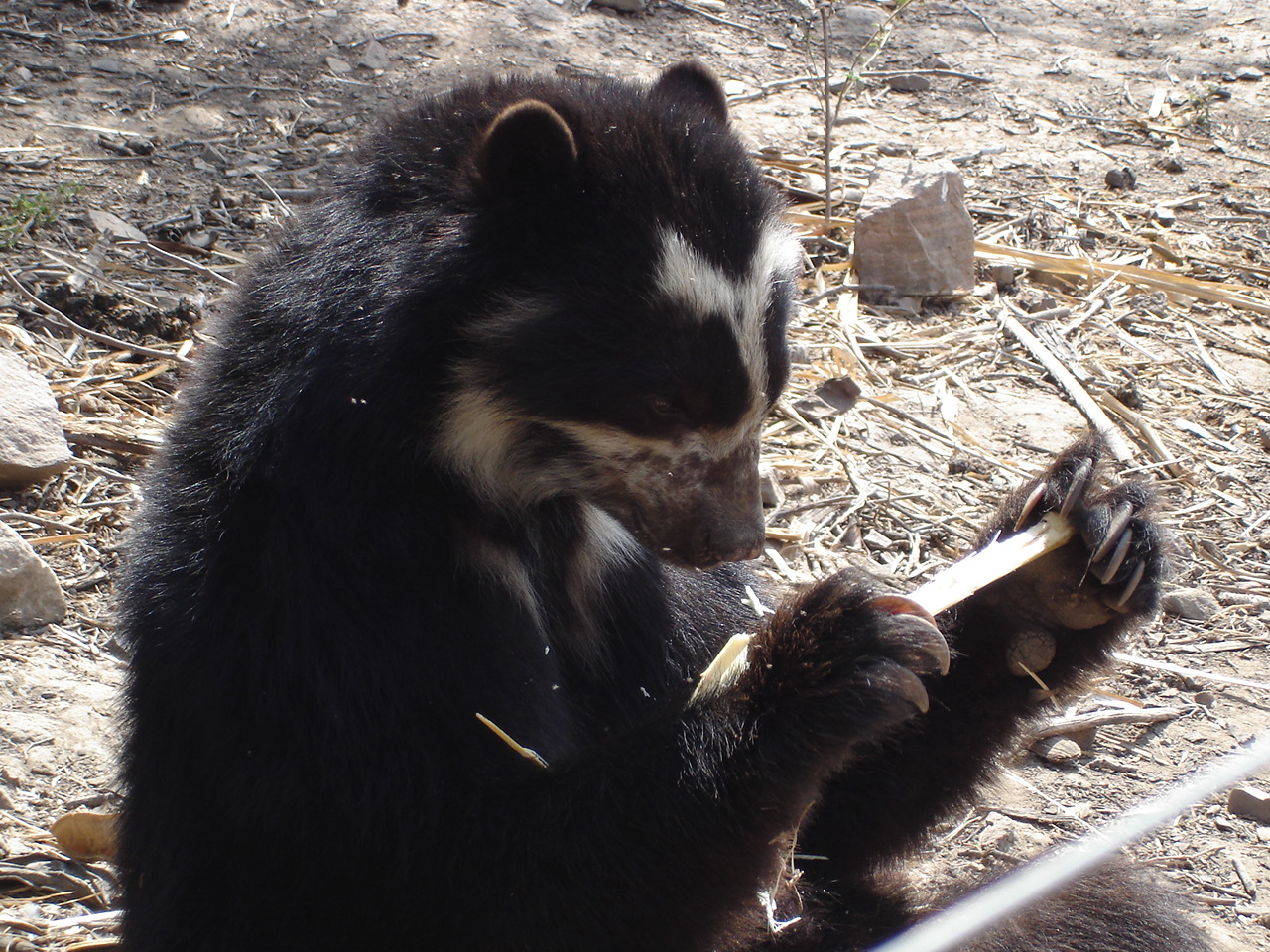
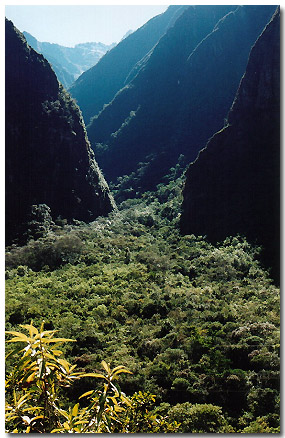
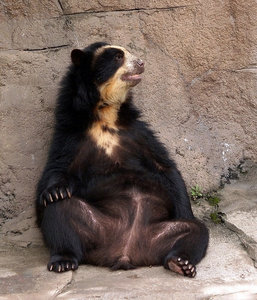
Santa Catalina is a farming community located in the department of Lambayaque in the northern region of Peru and its inhabitants are the owners of a vast region that includes a hill called Cerro Chaparri and its surroundings. Bernie Peyton arrived there in 1977, although it started in 1969, when those things in life, a young photographer named Peruvian Heinz Plenge befriended a resident of Chongoyape who told him she had caught a spectacled bear in the hill Chaparri. Heinz found with their own eyes the presence of these ursids on the hill for the first time. Heinz comes nine years after his friend Bernie Peyton, then a graduate student and full investigation of the Andean Bears, to the rural community of Santa Catalina de Chongoyape.


The story of what happened in Santa Catalina is so amazing and exciting that has motivated Bernie Peyton to create a short film "Hands and Claws" where outlines some of these events, the same tells us as follows:
 "I returned to Peru in 1999 to find another way to promote the conservation of the spectacled bear, especially in reaching the public has no access or read scientific papers. I was with Heinz Plenge Qoylluriti filming the party (in this religious festival Peruvian ancestral origins, disguised as ukukus beings that are half man, half spectacled bear) and in one of those days, I received a phone call from INRENA (National Institute Natural Resources) advising that they had located a spectacled bear living in the house of a Oxapampa peasant family. I talked with Heinz and he told me that was sure to seize the female and put in a cage. Then take a radical decision ... I bought the bear and we Chaparri jungle. To do this we built a corral electrified to allow us to be adapting to their new environment, but also decided to form a film company to allow me to tell the world this story. Without any knowledge of making movies and the first experience in caring for captive bears, started filming and so was born the movie "Hands and Claws" that we end in 2001. My role was the technical and Heinz were the relations with the community. "
 "I returned to Peru in 1999 to find another way to promote the conservation of the spectacled bear, especially in reaching the public has no access or read scientific papers. I was with Heinz Plenge Qoylluriti filming the party (in this religious festival Peruvian ancestral origins, disguised as ukukus beings that are half man, half spectacled bear) and in one of those days, I received a phone call from INRENA (National Institute Natural Resources) advising that they had located a spectacled bear living in the house of a Oxapampa peasant family. I talked with Heinz and he told me that was sure to seize the female and put in a cage. Then take a radical decision ... I bought the bear and we Chaparri jungle. To do this we built a corral electrified to allow us to be adapting to their new environment, but also decided to form a film company to allow me to tell the world this story. Without any knowledge of making movies and the first experience in caring for captive bears, started filming and so was born the movie "Hands and Claws" that we end in 2001. My role was the technical and Heinz were the relations with the community. "
 A long and thorough study of bears, proper documentation of their status and many years of work, sweat and heartbreak, culminating in the creation of the first private reserve in Peru. To do so Bernie and Heinz established a remarkable strategy to change the hunting behavior of the inhabitants of nearby Cerro offering the opportunity to work with a group of people devoid of sources of employment and that they did donate the land for conservation. Today, they see themselves as caretakers, guides and protectors of their own reserves: Conservation Area Chaparri Private. Bernie Peyton accompanied these efforts to 1985 and the reserve was properly established in 2001, a seed was planted a sturdy tree.

Peyton In 1984 Bernie received his Master of Science in Wildlife Biology from the University of Montana. Although the professional named Bernie moved to other animal species in danger of extinction, as the kit fox, burrowing owl and the kangaroo rat in the desert of San Joaquin in California, his heart remained with the spectacled bear which is evidenced by his presidency of the Andean Bear Specialist Group (1980-1992), shared his presidency in the Group of Specialists Bears of the International Union for Conservation of Nature (1992-1998), director of the International Association of Bear (1995-2001); groups through which he helped to create more protected areas of Jucumari in 5 countries Andean.
In 1995 obtained his Ph.D. in zoology from the University of California at Berkeley. While all these extraordinary events occurred, double and Bernie Peyton. He had not forgotten their inner child of 9 years and the contribution that her grandfather to give him his first origami book, one published in English by Isao Honda.
In 1995 obtained his Ph.D. in zoology from the University of California at Berkeley. While all these extraordinary events occurred, double and Bernie Peyton. He had not forgotten their inner child of 9 years and the contribution that her grandfather to give him his first origami book, one published in English by Isao Honda.

However, in 1998 another extraordinary event occurred in the life of Bernie Peyton, an event that unites us even more to it like origami. Over many years, a huge buildup of experience in the fold should certainly flourish in another level and certainly no better place than the conventions which, through contact with other origami, wake the sleeping capacity. And it was there in the Origami USA convention where Bernie Peyton, led by Joseph Wu, Robert Lang and other large origami, he discovered his creative spirit. No longer bend the gorgeous models of others, and his hands would cross the adventures of others, the time had arrived, passed down their history by designing their own models and, no doubt, knew which models were going out of its creators hands: those who watched, saw, palp and closer during his life as a scientist.

In the quiet of his home in Berkeley, California, on a bench near a large window and a magnificent view of a garden designed more like Amazon jungle like environment subtropical, began to be born creatures of the forest: bears of all kinds, especially that of spectacles of course, polar bears, pandas, black bears, grizzlies, eagles, snakes, kangaroo rats, frogs, owls, salmon, sharks, elephants, hares, but also environments, leaves, rough seas, turbulent flow of rivers, blue skies, in short, all the elements needed to create a special origami, Bernie who defines it as "something is going to happend!" ("something is about to happen!").


So until today. Countless their contributions to the world of origami, the wonderful models, their workshops, their videos, exhibitions around the world and their participation in various conventions. Without a doubt, the dedication of this contest by Mr Peyton is a tribute to one of our great masters.